


English Qualifications
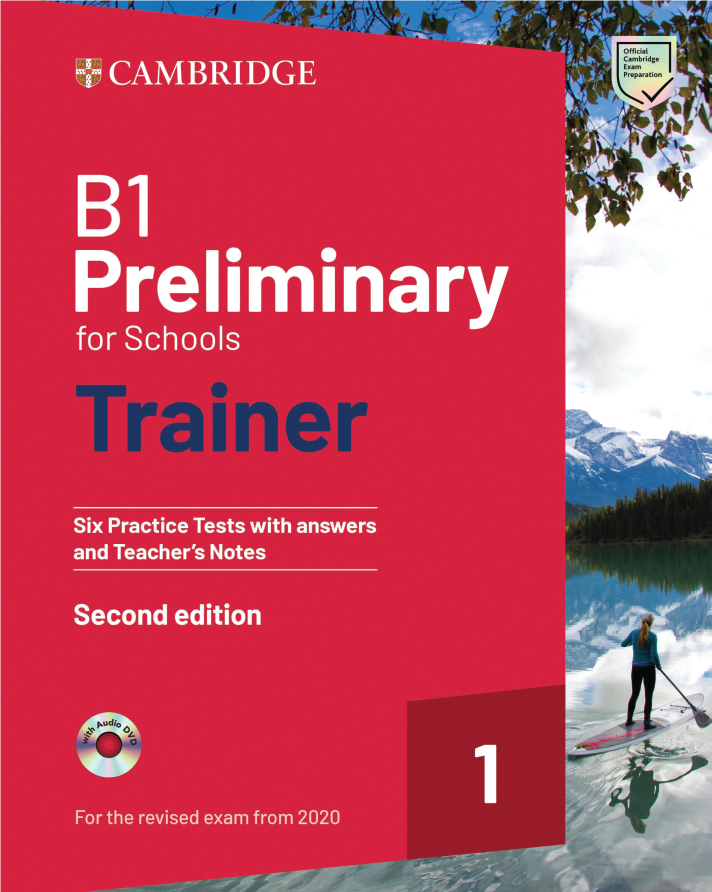
B1 Preliminary for Schools (PET)
Exams:
For School / Students
For Teachers
About the B1 Preliminary for Schools (PET) exam:
B1 Preliminary for Schools, formerly known as Cambridge English: Preliminary for Schools (PET for Schools), is one of our Cambridge English Qualifications. It is the English language exam that shows that students have mastered the basics.
A B1 Preliminary for Schools qualification shows that a student has mastered the basics of English and now has practical language skills for everyday use.
This exam is the logical step in a student’s language learning journey between A2 Key for Schools and B2 First for Schools.
B1 Preliminary for Schools is targeted at the same CEFR level as B1 Preliminary but with content aimed at school-age learners rather than adults.
Key facts:
| Exam Format | |
|---|---|
| CEFR level | B1 |
| Test format | CB or PB* |
| Number of papers | 4 |
| Total exam length | 132 mins |
| Reading and Writing | 45 mins |
| Listening | 30 mins |
| Speaking | 12 mins |
A B1 Preliminary for Schools qualification shows that a student can:
- Read simple textbooks and articles in English
- Write letters and emails on everyday subjects
- Understand factual information
- Show awareness of opinions and mood in spoken and written English.
Reasons to choose B1 Preliminary for Schools:
- Easily integrated into a school’s curriculum.
- Part of a suite of exams that offer step-by-step progression for students.
- Comprehensive support in exam preparation and administration.
Test format
B1 Preliminary for Schools is made up of four papers developed to test students’ English skills. You can see exactly what’s in each paper below.
The formats below are the same for both the digital and paper-based.
| Paper | Content | Marks (% of total) |
Purpose |
|---|---|---|---|
|
Reading |
6 parts/ 32 questions |
25% |
Shows you can read and understand the main points from signs, newspapers and magazines. |
|
Writing |
2 parts/ 2 questions |
25% |
Shows you can use vocabulary and structure correctly. |
|
Listening |
4 parts/ |
25% |
You have to be able to follow and understand a range of spoken materials including announcements and discussions about everyday life. |
|
Speaking |
4 parts |
25% |
Shows you can take part in a conversation by answering and asking simple questions. Your Speaking test will be conducted usually face to face with one or two other candidates and two examiners. One of the examiners (who could be online, examining remotely) talks to you and the other examiner listens. This makes your test more realistic and more reliable. Examiners may use their mobile phones for entering marks using an app. |
What’s in the Reading paper?
The B1 Preliminary for Schools Reading paper has six parts. There are different types of texts and questions.
Part 1 (Multiple choice)
| What do candidates have to do? | Read five real-world notices, messages and other short texts for the main message. |
|---|---|
| How many questions are there? | 5 |
| How many marks are there? | One mark for each correct answer. |
Part 2 (Matching)
| What do candidates have to do? | Match five descriptions of people to eight short texts on a particular topic, showing detailed comprehension. |
|---|---|
| How many questions are there? | 5 |
| How many marks are there? | One mark for each correct answer. |
Part 3 (Multiple choice)
| What do candidates have to do? | Read a longer text for detailed comprehension, gist, inference and global meaning, as well as writer’s attitude and opinion. |
|---|---|
| How many questions are there? | 5 |
| How many marks are there? | One mark for each correct answer. |
Part 4 (Gapped text)
| What do candidates have to do? | Read a longer text from which five sentences have been removed. Show understanding of how a coherent and well-structured text is formed. |
|---|---|
| How many questions are there? | 5 |
| How many marks are there? | One mark for each correct answer. |
Part 5 (Multiple choice cloze)
| What do candidates have to do? | Read a shorter text and choose the correct vocabulary items to complete gaps. |
|---|---|
| How many questions are there? | 6 |
| How many marks are there? | One mark for each correct answer. |
Part 6 (Open cloze)
| What do candidates have to do? | Read a shorter text and complete six gaps using one word for each gap. |
|---|---|
| How many questions are there? | 6 |
| How many marks are there? | One mark for each correct answer. |
What’s in the Writing paper?
The B1 Preliminary for Schools paper has two parts. You have to show that you can write different types of text in English.
Part 1 (Writing an email)
| What do candidates have to do? | Write about 100 words, answering the email and notes provided. |
|---|---|
| How many questions are there? | 1 |
| How many marks are there? | The question has a maximum of 20 marks available. |
Part 2 (Choice between an article or a story)
| What do candidates have to do? | Write about 100 words, answering the question of their choosing. |
|---|---|
| How many questions are there? | Choose one question from a choice of two. |
| How many marks are there? | The question has a maximum of 20 marks available. |
What’s in the Listening paper?
The B1 Preliminary for Schools Listening paper has four parts. For each part, you have to listen to a recorded text or texts and answer some questions. You hear each recording twice.
Part 1 (Multiple choice)
| What do candidates have to do? | Identify key information in seven short monologues or dialogues and choose the correct visual. |
|---|---|
| How many questions are there? | 7 |
| How many marks are there? | One mark for each correct answer. |
Part 2 (Multiple choice)
| What do candidates have to do? | Listen to six short dialogues and understand the gist of each. |
|---|---|
| How many questions are there? | 6 |
| How many marks are there? | One mark for each correct answer. |
Part 3 (Gap fill)
| What do candidates have to do? | Listen to a monologue and complete six gaps. |
|---|---|
| How many questions are there? | 6 |
| How many marks are there? | One mark for each correct answer. |
Part 4 (Multiple choice)
| What do candidates have to do? | Listen to an interview for a detailed understanding of meaning and to identify attitudes and opinions. |
|---|---|
| How many questions are there? | 6 |
| How many marks are there? | One mark for each correct answer. |
What’s in the Speaking paper?
The B1 Preliminary for Schools Speaking test has four parts and you take it together with another candidate. There are two examiners. One of the examiners talks to you and the other examiner listens.
Part 1 (Interview)
| What do candidates have to do? | Respond to questions, giving factual or personal information. |
|---|---|
| How long do candidates have to speak? | 2 minutes. |
Part 2 (Extended turn)
| What do candidates have to do? | Describe one colour photograph, talking for about 1 minute. |
|---|---|
| How long do candidates have to speak? | 3 minutes. |
Part 3 (Discussion)
| What do candidates have to do? | Make and respond to suggestions, discuss alternatives and negotiate agreement. |
|---|---|
| How long do candidates have to speak? | 4 minutes. |
Part 4 (General conversation)
| What do candidates have to do? | Discuss likes, dislikes, experiences, opinions, habits, etc. |
|---|---|
| How long do candidates have to speak? | 3 minutes. |